

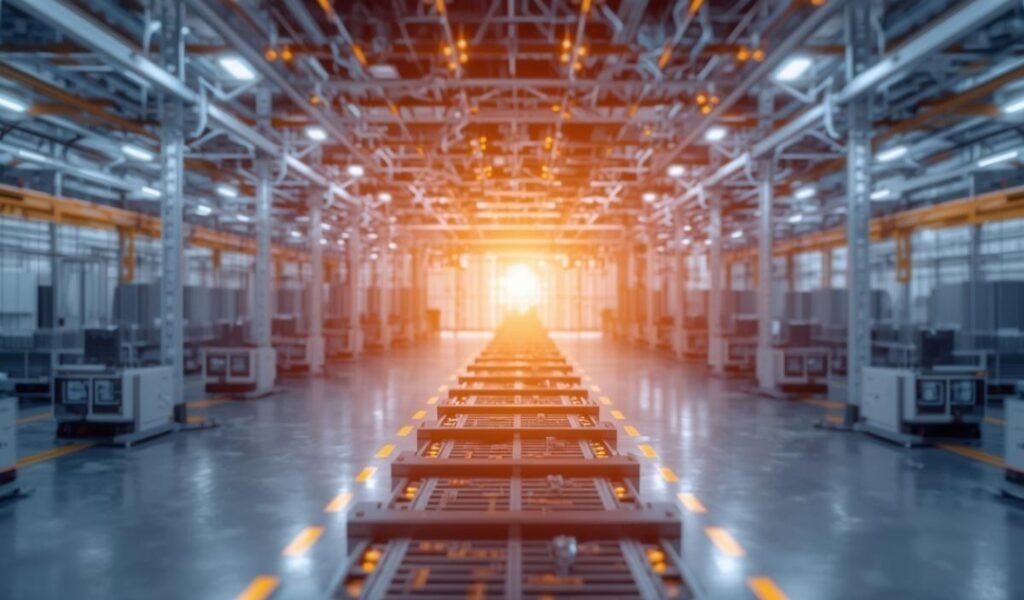
Industrial automation has transformed the way modern factories operate, making production faster, more efficient, and highly reliable. At the center of this transformation lies electronics—the key technology that enables machines, systems, and processes to function with minimal human intervention. From simple control circuits to advanced robotic systems, electronics play a vital role in powering today’s industrial world.
In traditional factories, most tasks were performed manually, which often led to errors, slower production, and safety risks. With the introduction of automation, electronic systems now handle repetitive and complex tasks with high precision. Devices such as sensors, controllers, and actuators work together to monitor and control industrial processes in real time. This has significantly improved productivity and reduced operational costs.
One of the most important components in industrial automation is the Programmable Logic Controller (PLC). A PLC is an industrial digital computer designed to control machinery and processes. It receives input signals from sensors—such as temperature, pressure, or proximity sensors—and processes this information based on a programmed logic. The PLC then sends output signals to devices like motors, valves, and relays to perform specific actions. This allows factories to automate tasks such as assembly, packaging, and material handling efficiently.
Sensors are another crucial part of industrial automation. They act as the “eyes and ears” of the system, collecting data from the environment. For example, a temperature sensor can monitor heat levels in a machine, while a proximity sensor can detect the presence of objects on a conveyor belt. This data is continuously fed into control systems, enabling accurate decision-making and smooth operation.
Actuators, on the other hand, are responsible for carrying out actions. These include electric motors, pneumatic cylinders, and hydraulic systems that physically move or control mechanisms within the factory. When a controller sends a signal, actuators respond instantly, ensuring that the desired operation is completed without delay.
Modern factories also rely heavily on communication systems. Technologies such as industrial Ethernet, Wi-Fi, and fieldbus networks allow different machines and control units to communicate with each other. This interconnected environment enables centralized monitoring and control, often referred to as Industrial Internet of Things (IIoT). With IIoT, factory managers can track performance, detect faults, and optimize processes remotely.
Robotics is another major aspect of industrial automation. Robots are widely used for tasks such as welding, painting, assembling, and packaging. These robots are controlled by sophisticated electronic systems that ensure accuracy, speed, and consistency. Unlike humans, robots can work continuously without fatigue, which greatly increases production efficiency.
One of the biggest advantages of industrial automation is improved safety. Electronic control systems can monitor hazardous conditions and automatically shut down machines if a problem is detected. This reduces the risk of accidents and protects workers from dangerous environments.
Energy efficiency is also enhanced through automation. Electronic systems can optimize the use of power by controlling when and how machines operate. This not only reduces energy consumption but also lowers operating costs and environmental impact.
However, industrial automation is not without challenges. The initial setup cost can be high, and maintaining advanced electronic systems requires skilled professionals. There are also concerns about cybersecurity, as connected systems may be vulnerable to digital threats. Despite these challenges, the long-term benefits of automation far outweigh the drawbacks.
In conclusion, electronics are the backbone of modern industrial automation. They enable factories to operate with greater precision, efficiency, and safety. As technology continues to advance, industrial automation will become even more intelligent and interconnected, shaping the future of manufacturing and driving global economic growth.