


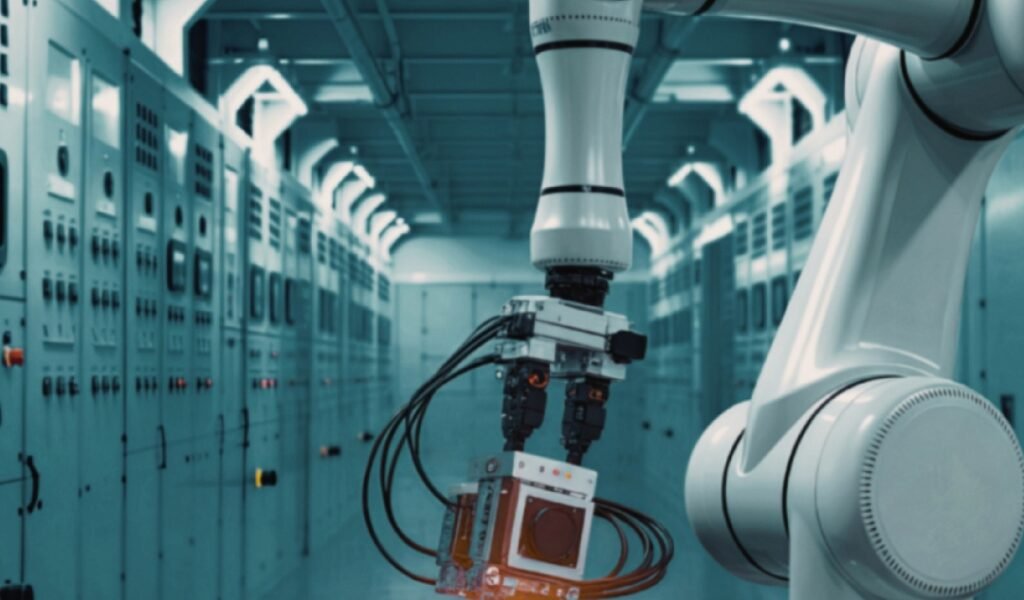
In today’s world, automation has become an essential part of both industrial and everyday applications. From manufacturing plants to smart home devices, automation systems are designed to perform tasks with minimal human intervention. At the core of these systems lies a powerful and compact component—the microcontroller. Often referred to as the “brain” of an automated system, microcontrollers play a crucial role in controlling, monitoring, and executing tasks efficiently.
A microcontroller is a small integrated circuit that contains a processor (CPU), memory, and input/output interfaces on a single chip. Unlike general-purpose computers, microcontrollers are designed for specific tasks. This makes them highly efficient, cost-effective, and reliable for automation purposes. They are widely used in systems where continuous monitoring and quick decision-making are required.
In automation systems, microcontrollers act as the central control unit. They receive input signals from various sensors such as temperature sensors, motion detectors, pressure sensors, or light sensors. These inputs provide real-time data about the environment or system conditions. The microcontroller then processes this data based on a pre-written program and decides what action to take. Finally, it sends output signals to actuators such as motors, relays, or displays to perform the required operation. This continuous cycle of input, processing, and output enables automated systems to function smoothly.
One of the key advantages of microcontrollers in automation is their ability to perform real-time operations. In industrial environments, timing and precision are critical. Microcontrollers can quickly respond to changes in input conditions, ensuring that processes run safely and efficiently. For example, in an automated conveyor system, a microcontroller can detect the presence of an object and control the movement of motors accordingly, preventing errors or accidents.
Microcontrollers are also highly versatile. They can be programmed for a wide range of applications, from simple tasks like blinking LEDs to complex systems like robotic arms and industrial control units. Popular microcontroller platforms such as Arduino, PIC, and ESP32 have made it easier for students, engineers, and hobbyists to develop automation projects. These platforms offer user-friendly programming environments and extensive community support.
Another important role of microcontrollers is in communication and connectivity. Modern automation systems often require devices to communicate with each other or with central control systems. Microcontrollers can be integrated with communication modules such as Wi-Fi, Bluetooth, or Zigbee, enabling them to connect to networks and exchange data. This is especially important in the development of Internet of Things (IoT) systems, where multiple devices work together to create smart and interconnected environments.
Energy efficiency is another area where microcontrollers excel. They are designed to consume very low power, making them ideal for battery-operated and energy-sensitive applications. This is particularly useful in remote monitoring systems, wearable devices, and smart sensors that need to operate for long periods without frequent maintenance.
Despite their many advantages, there are some challenges in using microcontrollers. Limited processing power and memory can restrict their use in highly complex applications. Additionally, designing and programming embedded systems requires a good understanding of both hardware and software. However, with advancements in technology, modern microcontrollers are becoming more powerful and easier to use.
In conclusion, microcontrollers are the backbone of modern automation systems. Their ability to process data, control devices, and operate efficiently makes them indispensable in today’s technology-driven world. As automation continues to grow in industries and daily life, the importance of microcontrollers will only increase. Learning and understanding how microcontrollers work opens the door to creating innovative solutions in electronics, robotics, and smart systems.