


Nanotechnology is rapidly transforming modern medicine by allowing scientists to work at an incredibly small scale—measured in nanometers, or one-billionth of a meter. At this microscopic level, materials behave differently, enabling researchers to design highly specialized particles and devices that can interact directly with cells, proteins, and even DNA. This breakthrough has introduced a new approach to healthcare, where treatments are not only more precise but also more effective and less harmful to the human body.
One of the most revolutionary uses of nanotechnology in medicine is targeted drug delivery. Traditional treatments, such as chemotherapy, often affect the entire body, damaging both healthy and diseased cells. This leads to severe side effects like fatigue, hair loss, and weakened immunity. Nanotechnology offers a smarter solution. Scientists can design nanoparticles that specifically target diseased cells, such as cancer cells, and deliver drugs directly to them. These nanoparticles can be programmed to release medication only when they reach the desired location, minimizing harm to healthy tissues and improving treatment outcomes. This level of precision is changing how we treat complex diseases.
Another powerful application is early disease detection. Detecting diseases at an early stage greatly increases the chances of successful treatment. Nanotechnology makes this possible through nanosensors—tiny devices capable of identifying changes in the body at a molecular level. These sensors can detect early signs of diseases like cancer, diabetes, or infections long before symptoms appear. In some cases, they can even identify a single abnormal cell. This allows doctors to begin treatment sooner, potentially saving lives and reducing healthcare costs.
Nanotechnology is also playing a key role in regenerative medicine, which focuses on repairing or replacing damaged tissues and organs. Scientists are developing nanomaterials such as nanofibers and nanoparticles that can support cell growth and tissue regeneration. For example, nanofiber scaffolds can be used to guide the growth of new skin cells for burn victims or to repair damaged muscles and bones. Researchers are also exploring how nanotechnology can help regenerate organs, which could reduce the need for organ transplants in the future.
In the field of medical imaging, nanotechnology is improving the accuracy and clarity of diagnostic tools. Nanoparticles can be used as contrast agents in imaging techniques like MRI, CT scans, and ultrasound. These particles enhance the visibility of tissues and abnormalities, making it easier for doctors to detect diseases and monitor treatment progress. Better imaging leads to more accurate diagnoses and more effective treatment plans.
Nanotechnology is also contributing to the development of advanced medical devices and implants. For instance, nanocoatings can be applied to surgical instruments and implants to reduce the risk of infection and improve compatibility with the human body. Smart implants embedded with nanosensors can monitor a patient’s condition in real time and send data to doctors, enabling continuous health monitoring. This is especially useful for patients with chronic diseases or those recovering from major surgeries.
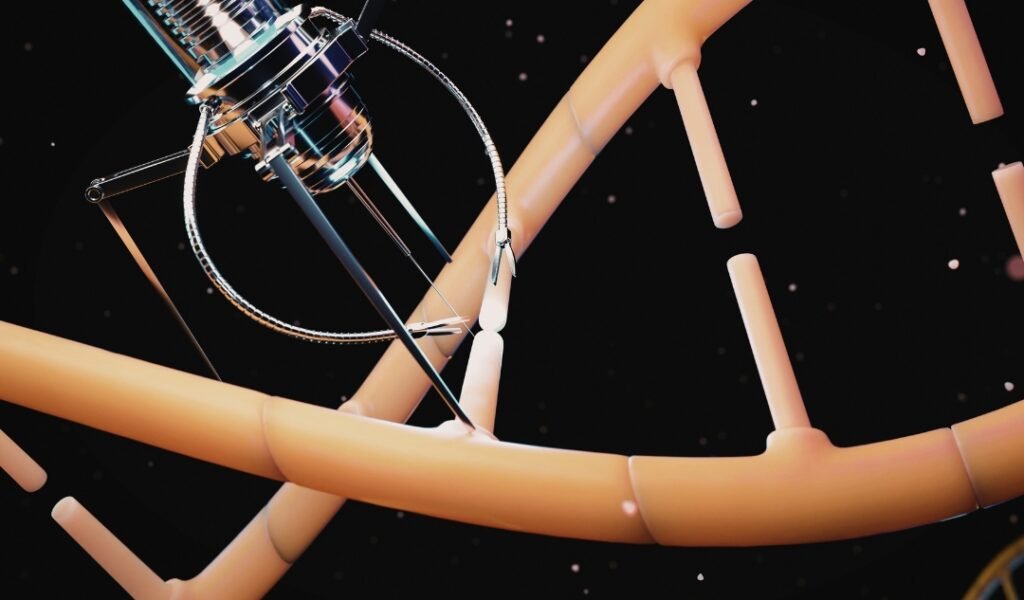
Another exciting area is the development of nanorobots—tiny machines that could one day perform medical tasks inside the human body. Although still largely in the research stage, scientists are working on nanorobots that can navigate through the bloodstream, remove blockages, repair damaged tissues, or even destroy cancer cells. While this may sound like science fiction, ongoing advancements suggest that such technologies could become a reality in the future.
Despite its incredible potential, nanotechnology in medicine also faces several challenges. Safety is a major concern, as the long-term effects of introducing nanoparticles into the human body are not yet fully understood. There are also regulatory and ethical issues that need to be addressed before widespread adoption. Additionally, the cost of developing and implementing nanotechnology-based treatments can be high, which may limit accessibility for some populations.
In conclusion, nanotechnology is revolutionizing the field of medicine by enabling more precise, efficient, and personalized healthcare solutions. From targeted drug delivery and early disease detection to tissue regeneration and advanced imaging, its applications are vast and continuously expanding. While challenges remain, ongoing research and innovation are paving the way for safer and more accessible technologies. As nanotechnology continues to evolve, it holds the promise of saving millions of lives and transforming the future of healthcare into something smarter, faster, and more effective than ever before.